
TL;DR: For a sewage backup in Tacoma, WA, call a restoration company that specializes in contaminated-water cleanup as soon as the backup starts, not just a plumber. A plumber can clear the line, but raw sewage is Category 3 water under the IICRC S500 standard and needs specialized extraction, disinfection, and drying. Frontline Fire & Flood answers 24/7 at (253) 200-0503 and can coordinate the cleanup with your insurance adjuster.
If sewage is coming up through a floor drain, bubbling into a tub, or pooling in a basement, you’re dealing with two separate problems at once: the plumbing issue that caused it and the contaminated water now sitting on your floor. Many Tacoma homes, especially older ones in the North End and Hilltop neighborhoods, still run on the original clay or cast-iron sewer laterals, and those lines are prone to root intrusion and collapse after decades in the ground. Knowing which call to make first saves time and keeps the damage from spreading.
When Should You Call a Plumber Instead of a Restoration Company?
Call a plumber first only if sewage is actively flowing and you need the source stopped; call a restoration company for everything that happens after the flow is controlled. A plumber’s job is the pipe: snaking the line, locating a collapse, or replacing a failed check valve. A restoration crew’s job is the contamination left behind, which a plumber is not equipped to remove safely.
If you’re not sure which one you need, shut off the water at the main or stop using fixtures that feed the affected line, then make the restoration call. A sewage cleanup crew can usually tell over the phone whether the backup also needs a plumber dispatched, and can help sequence the two visits so you’re not paying for standing water to sit longer than it has to.
Is a Sewage Backup Dangerous?
Yes. Raw sewage carries bacteria, viruses, and parasites, and the EPA classifies this kind of wastewater as a serious health hazard that requires PPE and proper disposal, not a mop and a bucket. Anything the water touched, carpet padding, drywall below the flood line, baseboards, unsealed wood flooring, is typically treated as contaminated and removed rather than cleaned, because porous materials hold bacteria deep in their fibers.
Standing sewage in a basement also raises the risk of mold within 24 to 48 hours in a humid Pacific Northwest fall, since the moisture doesn’t need much encouragement once it’s sitting against drywall. That’s part of why speed matters more than trying to handle it yourself with household cleaners, which don’t reach the contamination hidden under flooring or inside wall cavities.
What Happens When You Call for Sewage Cleanup?
The first call is mostly information gathering: where the backup started, what rooms it reached, and whether the source is still flowing. Have your address, the approximate area affected, and your insurance company’s name ready, since that speeds up both the dispatch and the claim documentation later.
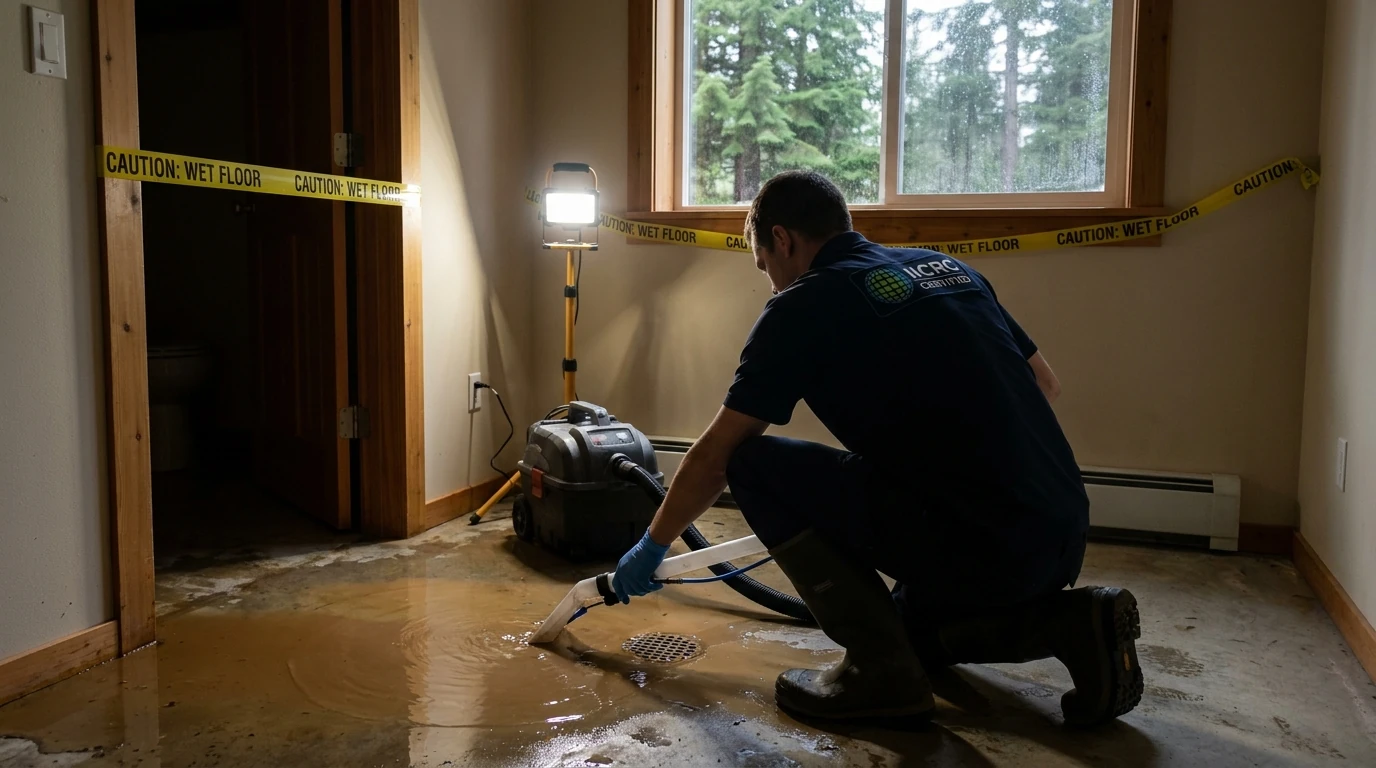
On arrival, a crew typically does a few things in order: confirms the source is contained, extracts standing water with pumps or truck-mounted equipment, removes contaminated porous materials that can’t be saved, and sets containment so the rest of the home isn’t exposed. From there, the space is cleaned and disinfected, then dried and monitored with moisture meters until readings return to normal. For a longer walkthrough of each phase, see our guide to sewage cleanup and remediation.
Does Homeowners Insurance Cover a Sewer Backup?
Usually only if you carry a sewer backup endorsement, which is a separate add-on from standard homeowners coverage in most Washington policies. Without that endorsement, a backup caused by a line failure or municipal sewer issue is often excluded, while a backup directly caused by a covered peril (like storm flooding overwhelming a line) may fall under different policy language.
Because coverage depends so heavily on the specific policy and the cause of the backup, document everything before cleanup starts: photos of the affected area, the source if it’s visible, and a list of materials removed. A restoration company that documents the scope in writing before work begins gives your adjuster something concrete to work from, rather than your memory of what the basement looked like.
If you’re dealing with active sewage in a Tacoma home right now, the priority is containment first, then the call. Call Frontline Fire & Flood at (253) 200-0503 for 24/7 sewage cleanup, and expect the crew to also flag whether a plumber or your insurer needs to be looped in.