
TL;DR: Sewage backups are classified as Category 3 water, also called black water, and they carry bacteria, viruses, and parasites that make DIY cleanup risky. Professional remediation removes contaminated materials, extracts standing water, disinfects every affected surface, and dries the structure to the IICRC S500 standard. Most homeowners policies cover sudden sewage backups if you carry a sewer backup rider, but coverage depends on the cause. Acting within the first few hours limits how much flooring, drywall, and insulation has to be torn out.
If sewage backed up through a floor drain in your Lacey basement, or a toilet overflowed onto the bathroom floor and started seeping into the hallway, you’re dealing with more than a mess. Sewage water carries pathogens that don’t wash away with a mop and a bottle of bleach. Between older clay sewer lines common in Hawks Prairie and the heavy root intrusion that shows up near mature trees along Woodland Creek, backups aren’t rare in this part of Thurston County. What you do in the next few hours determines whether this is a contained cleanup or a full tear-out.
What Makes Sewage Water Different From a Regular Leak?
Sewage is classified as Category 3 water, meaning it’s grossly contaminated and can contain bacteria like E. coli, viruses, and parasites. That classification, set by the IICRC, changes everything about how the cleanup has to be handled.
Unlike a clean supply-line break, sewage water is treated as a biohazard from the moment it touches a surface. Porous materials that absorb it, carpet, carpet pad, drywall below the flood line, insulation, and often subfloor, generally can’t be sanitized and saved. They have to be removed and disposed of properly, not just dried out.
The EPA advises against DIY cleanup of raw sewage in any quantity beyond a very small, contained spill, because contact or aerosolized particles from extraction and cleaning can create real health risks. That’s the line where most homeowners hand the job to a licensed remediation crew instead of tackling it themselves.
How Does the Cleanup Process Actually Work?
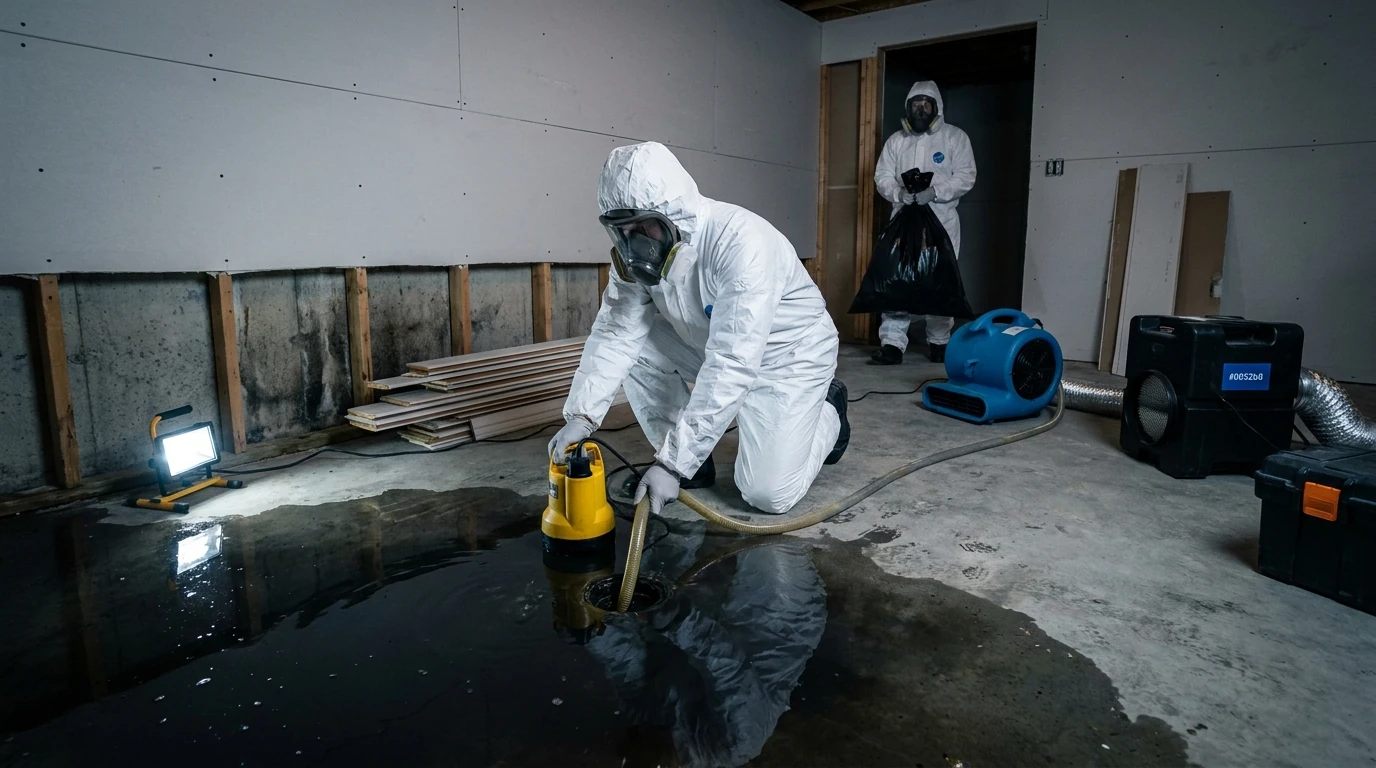
A proper sewage cleanup follows five phases: containment, extraction, removal of contaminated materials, disinfection, and structural drying, documented at every step for insurance. Skipping any phase risks lingering odor, hidden contamination, or a claim denial.
- Containment. The affected area gets isolated to stop contaminated water or airborne particles from spreading to unaffected rooms, especially through HVAC returns.
- Extraction. Standing water and sewage solids are pumped and extracted using truck-mounted or portable extraction equipment, not shop-vacs, which aren’t rated for Category 3 contamination.
- Removal. Anything porous that absorbed contaminated water, baseboards, drywall, carpet, insulation, gets cut out and bagged for disposal, typically 12 to 18 inches above the visible water line.
- Disinfection. Remaining hard surfaces (concrete, tile, studs, subfloor) get treated with an EPA-registered antimicrobial, applied in multiple passes on porous framing.
- Drying. Air movers and dehumidifiers run until moisture readings confirm the structure is dry to the IICRC S500 standard, usually 3 to 5 days depending on how much material was affected.
Our team at Frontline Fire & Flood documents moisture readings and photos at each phase specifically so the paper trail matches what an adjuster needs to see, since sewage claims get scrutinized more closely than a simple pipe leak.
If you’re also dealing with standing water beyond just the sewage-affected area, our water damage restoration and emergency water cleanup crews often run in tandem with a sewage job, since the extraction equipment and drying process overlap heavily. See our guide on what to do in the first 24 hours after water damage for the immediate steps that apply to both.
What Mistakes Make a Sewage Backup Worse?
The biggest mistake is trying to mop up sewage water yourself and letting the structure sit wet while you wait to “see if it dries out.” That delay is exactly what turns a contained backup into a mold problem.
A few specific errors show up over and over in Lacey homes:
- Running the washing machine or dishwasher before the line clears. If the backup is coming from a clogged main line, adding more water just pushes it back up somewhere else.
- Using bleach alone on porous materials. Bleach doesn’t penetrate drywall, carpet pad, or wood framing deeply enough to disinfect Category 3 contamination. It sanitizes the surface and leaves the source underneath.
- Not shutting off the water source. If the backup is tied to a fixture, not just the main line, leaving it running keeps adding volume to an already-contaminated area.
- Skipping documentation. Photos and a written description before anything gets touched matter enormously if you’re filing a claim. Once contaminated material is bagged and hauled out, an adjuster has to take your word for the extent unless it was photographed first.
Because Category 3 water sits wet for even a short window, mold growth is a real risk if drying doesn’t start fast. If you’re seeing musty odor or discoloration days after a backup was “cleaned up,” it’s worth a look, our mold remediation crews get called in after sewage jobs more often than people expect.
Will Insurance Cover a Sewage Backup, and What Should You Do Next?
Most standard homeowners policies exclude sewage and drain backups unless you’ve added a sewer/drain backup endorsement, which is a common but separate rider, not automatic coverage. Check your declarations page for a line item specifically naming backup or overflow coverage.
If you have the endorsement, coverage typically applies whether the backup came from a municipal line, a private lateral, or a failed sump pump, though limits are often lower than your dwelling coverage, commonly $5,000 to $10,000. Without the rider, you’re generally on your own for anything traced to a sewer line or septic failure, though a burst supply pipe that happens to carry sewage (like a failed toilet supply line) may fall under standard water damage coverage instead. Our post on what homeowners insurance covers for water damage walks through how adjusters draw that line.
The practical next step is simple: stop using the affected plumbing, photograph the damage before touching anything, and get a written scope of work from a licensed remediation company before cleanup starts. That scope becomes your documentation for the claim, whether you’re covered or paying out of pocket.
A sewage backup in a finished basement or a bathroom that shares a wall with living space isn’t a wait-and-see situation. The faster contaminated materials come out and drying starts, the less gets torn out and the lower the total cost runs.
About Frontline Fire & Flood
Frontline Fire & Flood is an IICRC-certified firm serving Lakewood, WA and the greater South Sound region, including Lacey, Olympia, and Tacoma, since 2014 (license CCFRONTFF761CB). Their crews handle water damage, sewage cleanup and sanitization, mold remediation, fire damage restoration, and related emergency services across the region, operating on a 24/7 emergency line.