
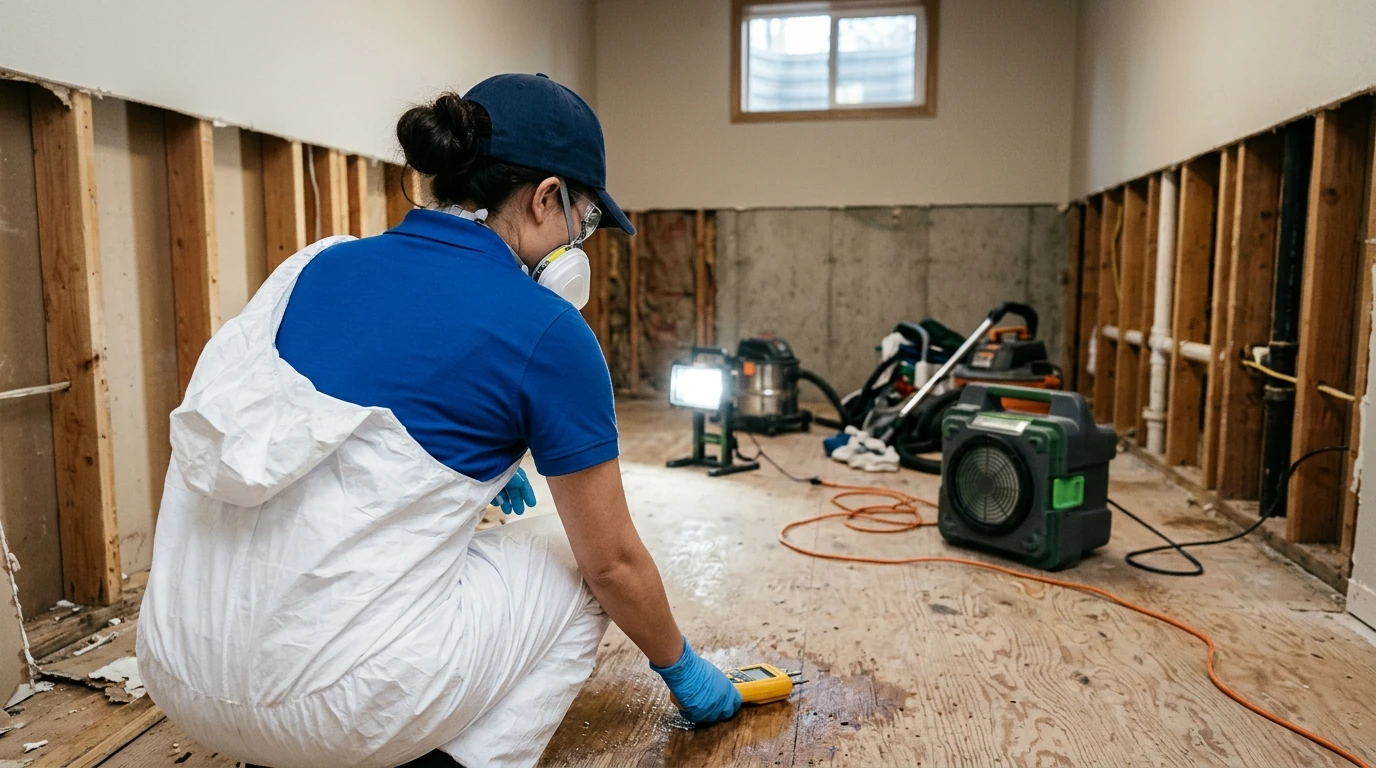
If sewage backed up through a floor drain, toilet, or washing machine line in your Tacoma home and you’re staring at a flooded basement or bathroom wondering what this is going to cost before you even pick up the phone, here’s the honest answer: there’s no flat per-job price. Sewage cleanup cost scales with how much square footage got wet, how contaminated the water is, and how much drywall, carpet, and subfloor has to be cut out and replaced. Anyone who quotes you a number sight unseen is guessing.
What Determines Sewage Cleanup Cost in Tacoma?
Three things move the price more than anything else: the square footage affected, the category of the water, and how much material is unsalvageable. A sewage backup is almost always Category 3 water, also called black water, which means porous materials like carpet pad, drywall, and insulation typically get removed rather than dried in place. That removal, not the water extraction itself, is usually the biggest line item.
A backup confined to a tiled bathroom with hard-surface flooring costs far less to clean up than one that sat in a finished, carpeted basement overnight. Time matters too: water that’s been standing for 24 to 48 hours starts creating mold risk on top of the sewage contamination, which is one more reason to stop the source and call for extraction the same day.
Typical Cost Scenarios
| Scope of Loss | What It Looks Like | Relative Cost Driver |
|---|---|---|
| Limited, surface-level | Toilet overflow caught within hours, hard-surface flooring, no porous material removed | Lowest: extraction and disinfection only |
| Single room, moderate | Floor drain or sump backup in a utility room or bathroom, some baseboard and flooring removal | Low to moderate: targeted demolition plus a few days of drying equipment |
| Multi-room or basement | Main line backup flooding a finished basement, carpet and pad removed, drywall cut to the waterline | Moderate to high: significant demolition, multi-day drying, antimicrobial application |
| Extensive or delayed discovery | Water sat for 24+ hours, mold starting on wall cavities, subfloor affected | Highest: extended demolition, mold remediation crossover, reconstruction |
These are relative scope tiers, not a price list. Every property and every backup is different, which is why a written, itemized scope after an on-site assessment is the only reliable number.
What Drives the Price Up or Down?
The final invoice comes down to a handful of measurable factors, not a mystery markup. Square footage and the category of water set the baseline; everything else adjusts it up or down.
- Category of water. Category 2 (gray water, like washing machine discharge) is less aggressive than Category 3 (sewage, any backup from beyond the trap). Category 3 almost always means more demolition and mandatory antimicrobial treatment.
- Porous material removal. Carpet, pad, drywall below the waterline, and sometimes subfloor get cut out and disposed of as contaminated material rather than cleaned and dried.
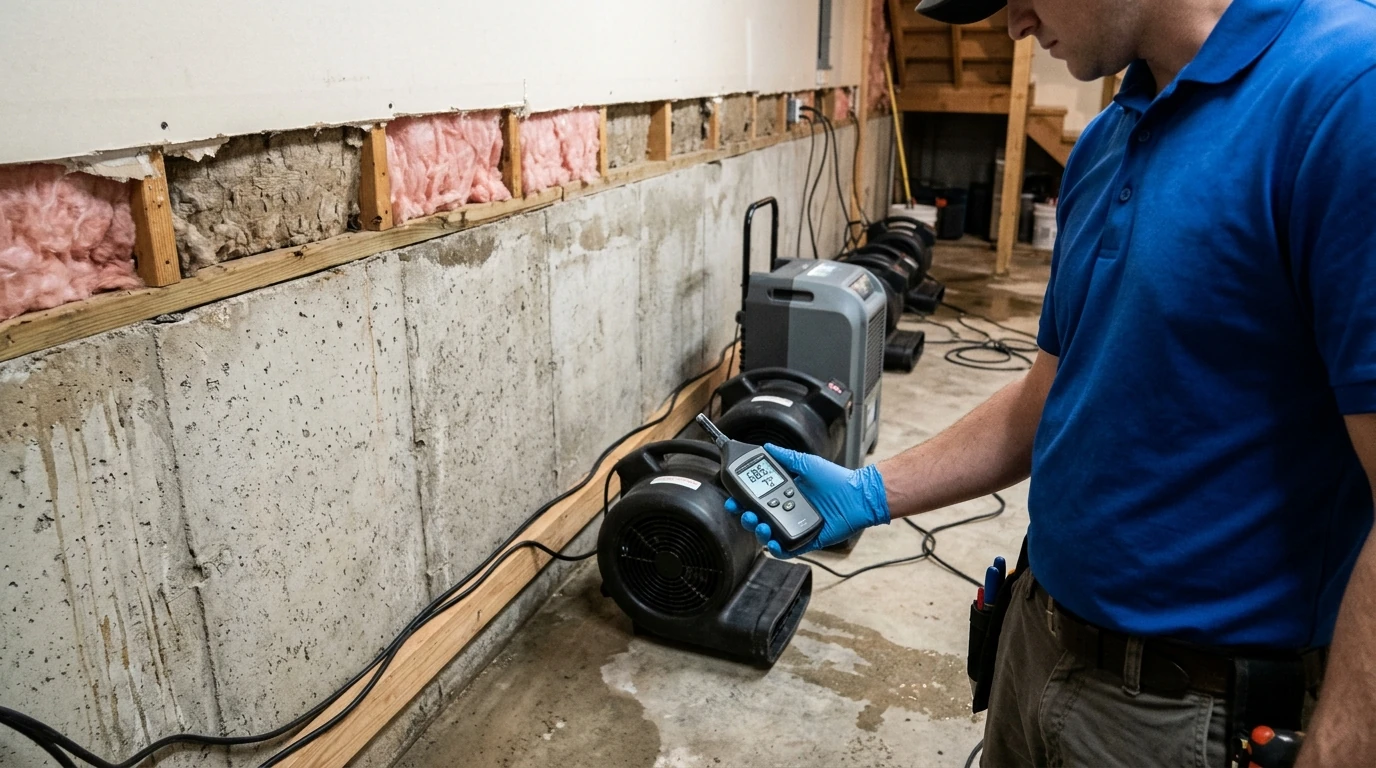
- Drying equipment days. Air movers and dehumidifiers run until the structure hits dry-standard readings, usually measured with a moisture meter and tracked daily.
- Antimicrobial and odor treatment. Sewage leaves behind odor-causing residue that needs more than surface cleaning; our odor removal process typically runs alongside the drying phase.
- Mold risk. If the backup sat before discovery, a mold assessment may get added to the scope before reconstruction starts.
- Access and reconstruction. A finished basement with built-ins or a bathroom with tile that has to be matched costs more to put back together than an unfinished utility space.
For a side-by-side look at how these same factors play out on a non-sewage water loss, see our water damage restoration cost guide for Washington.
Does Homeowners Insurance Cover Sewage Backup Cleanup in Tacoma?
Most standard Washington homeowners policies do not automatically cover sewer or drain backups or a failed sump pump. That coverage usually requires a separate water backup (sewer/sump) endorsement added to the policy, not the base policy itself.
If you’ve added that endorsement, the cleanup, demolition, and often the contents affected are typically covered up to the endorsement’s limit. If you haven’t, the cost usually falls to the homeowner unless a City-owned main line caused the backup (more on that below). Either way, document everything: photos before anything is touched, a written scope from the cleanup crew, and receipts for any emergency mitigation. The Washington Office of the Insurance Commissioner is the place to check your specific policy language or file a complaint if a claim gets denied unfairly. If you’re not sure what to do first, our guide on who to call for a sewage backup in Tacoma walks through the first hour.
What Happens During a Professional Sewage Cleanup?
A professional sewage cleanup follows a set sequence built around the IICRC S500 standard for water damage restoration, adjusted for the higher contamination level of Category 3 water.
- Assessment and categorization. A technician identifies the source, confirms the water category, and maps how far it traveled, including under flooring and inside wall cavities.
- Extraction. Standing water and saturated material get pumped and extracted first to stop ongoing damage.
- Demolition of unsalvageable material. Carpet, pad, and drywall affected by Category 3 water are cut out and bagged for disposal, typically to a consistent height above the visible waterline.
- Cleaning and antimicrobial application. Remaining structural surfaces are cleaned and treated to address bacterial contamination, not just moisture.
- Controlled drying. Air movers and dehumidifiers run until moisture meter readings confirm the remaining structure is back to a dry standard, usually monitored daily.
- Odor treatment. Hydroxyl generators or thermal fogging address lingering odor that cleaning alone won’t fully remove.
- Reconstruction. Once everything is dry and clear, drywall, flooring, and trim go back in to match the original space.
Who’s Responsible When a Tacoma Sewer Line Backs Up?
In Tacoma, the homeowner generally owns and maintains the side sewer, the private lateral line running from the house to the public main, while the City maintains the main line itself. If the backup is traced to a blockage or failure in the homeowner’s own lateral, which is common in North Tacoma and Proctor District homes with original clay or cast-iron pipe, the cleanup cost and the line repair are typically the homeowner’s responsibility. If the City’s main line is the documented cause, there may be a separate claims process with the City, but that determination doesn’t need to hold up interior cleanup, which should start the same day regardless of fault. Keep photos, keep the plumber’s or City’s documentation of the cause, and let the cleanup and the liability question run on separate tracks.
A sewage backup in an older Tacoma home, especially one near Point Defiance or in the Stadium District with original clay laterals, is often a symptom of root intrusion or a settling line, not a one-time fluke. If backups have happened more than once, a camera inspection of the lateral is worth doing alongside the cleanup.
If you’re dealing with standing sewage right now, the priority is stopping further contact with the water and getting an assessment of the sewage cleanup scope before anything dries into the subfloor. Call Frontline Fire & Flood at (253) 200-0503 for a written scope before any demolition starts.
About Frontline Fire & Flood
Frontline Fire & Flood is an IICRC Certified Firm based in Lakewood, WA, serving Tacoma and the South Sound since 2014 under Washington contractor license CCFRONTFF761CB (verify any WA contractor license here). The team holds IICRC WRT, AMRT, FSRT, and ASD certifications and provides 24/7 response for water damage, sewage cleanup, and odor removal across Pierce and Thurston counties. This guide was prepared with input from Jared Toppenberg.