
TL;DR: A sewage backup is Category 3 black water, so the company you hire should carry an IICRC WRT (Water Restoration Technician) credential, follow the ANSI/IICRC S500 protocol for Category 3 loss, hold an active Washington contractor license, show up in full PPE with containment set up before cleanup starts, and document everything for your insurance adjuster. Ask about each item before you let anyone past the front door.
If your floor drain just backed up or a toilet overflowed and you’re standing in a Tacoma bathroom looking at standing wastewater, the instinct is to call whoever answers the phone first. That’s a mistake. Sewage cleanup is the one restoration job where the wrong hire can leave your family exposed to pathogens, structural damage that mold grows into, or a denied insurance claim because nobody documented the loss correctly. Here’s what actually separates a company qualified to do this work from one that just owns a wet vac.
What certification should a sewage cleanup company actually have?
Look for a company whose technicians hold the IICRC Water Restoration Technician (WRT) certification and whose crew follows the ANSI/IICRC S500 Standard for Professional Water Damage Restoration, the industry protocol that governs how Category 3 water is supposed to be handled.
Under that standard, sewage from a backed-up drain, a sewer line, or a toilet overflow beyond the trap is always Category 3, grossly contaminated water, regardless of how clean it looks. That classification isn’t optional paperwork. It determines which materials get removed instead of dried, what PPE the crew wears, and what gets treated with antimicrobial before anyone closes the walls back up. A company that can’t name their certifying body or explain S500 in plain terms probably isn’t trained to the standard.
Frontline Fire & Flood is an IICRC Certified Firm with technicians holding the WRT credential, which is the credential that specifically governs Category 3 water work like a sewage backup.
Does the company hold a current Washington contractor license?
A legitimate restoration company in Tacoma holds an active Washington state contractor license, which you can verify yourself in about thirty seconds on the L&I contractor lookup tool.
Type in the company name or license number before they arrive, not after. An unlicensed outfit might be perfectly capable of running a wet vac, but you have no recourse if something goes wrong with the work, and an unlicensed contractor’s invoice can complicate an insurance reimbursement. Frontline Fire & Flood is licensed in Washington (license CCFRONTFF761CB) and insured, which is worth confirming for any company before they’re in your home.
What should you actually see when the crew shows up?
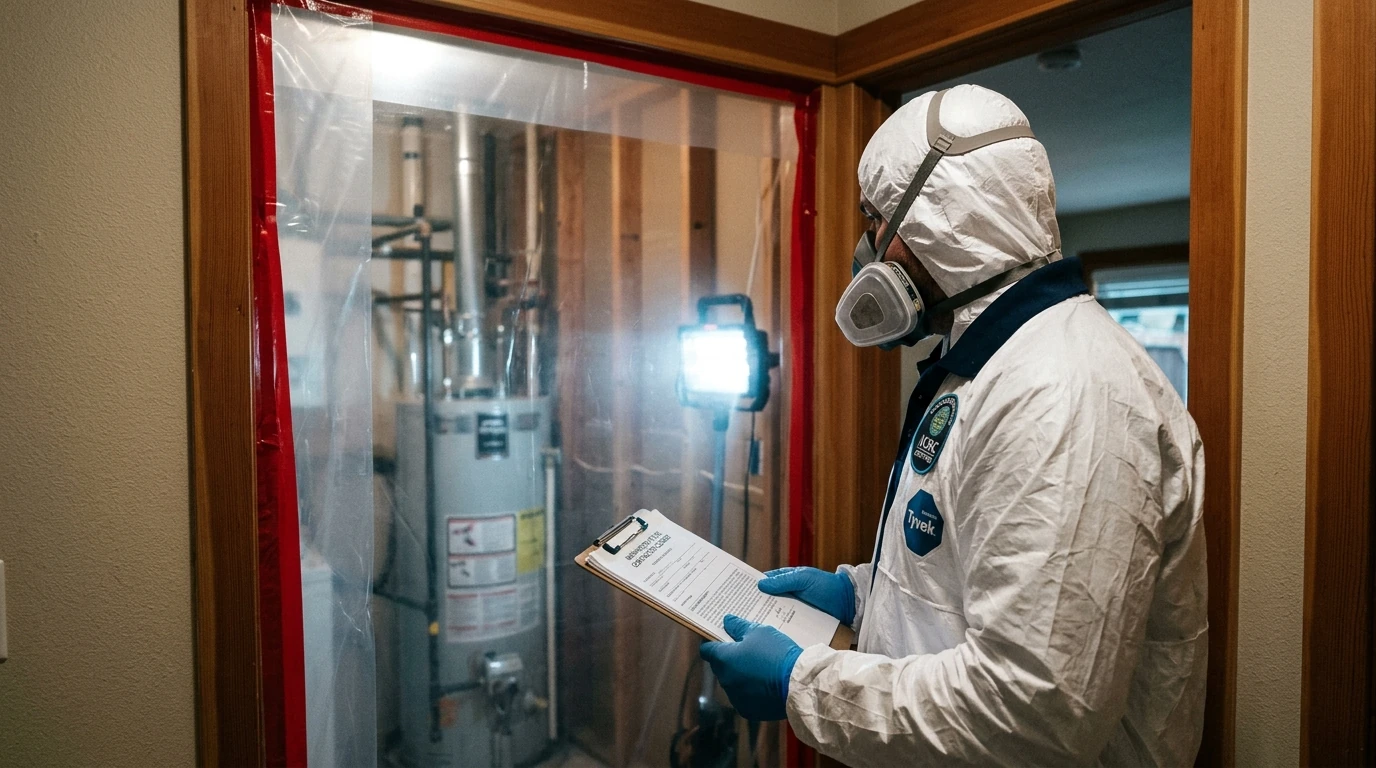
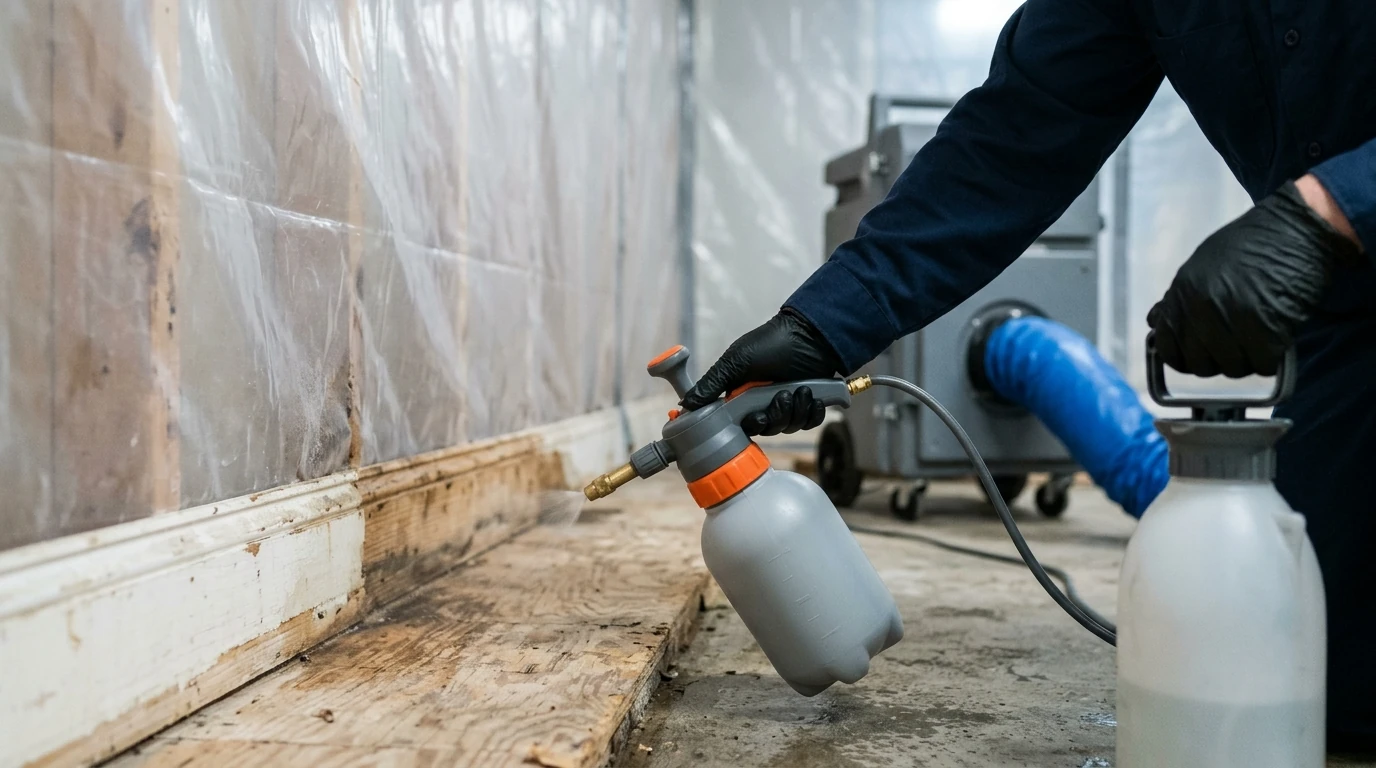
On a real Category 3 job, you should see full personal protective equipment, physical containment, and antimicrobial treatment, not just a shop vac and a mop.
That means Tyvek suits, gloves, and respiratory protection on every technician who enters the affected area, consistent with OSHA guidance on bloodborne and biological hazard exposure. It means poly sheeting or containment barriers separating the contaminated zone from the rest of the house, so sewage-affected air and debris don’t spread to unaffected rooms. Porous materials that touched Category 3 water (carpet pad, drywall, baseboard, sometimes subfloor) typically get removed rather than dried in place, because they can’t be reliably decontaminated. Everything that stays gets treated with an EPA-registered antimicrobial before the space is closed back up.
If a crew walks in without gloves, skips containment, or starts drying carpet that was sitting in raw sewage, that’s a sign to ask more questions before they continue.
Will insurance cover the sewage cleanup, and will the company document it correctly?
Most standard homeowners policies do not automatically cover sewer backup or sump pump failure. That coverage usually requires a separate water backup (sewer/sump) endorsement added to your policy, something worth checking before you assume it’s included (see Triple-I’s overview of what a standard homeowners policy covers).
Because of that, documentation matters more on a sewage loss than almost any other restoration job. A good company photographs the affected area before any work starts, logs moisture readings, keeps a written inventory of what’s removed, and provides a scope of work your adjuster can review line by line. If a company doesn’t mention documentation at all during the first call, ask who’s going to produce the paperwork your claim will need.
Frontline Fire & Flood builds that documentation into every sewage cleanup job and can walk you through what your specific policy is likely to cover before work begins.
Is the company actually available when a sewage backup happens?
Sewage backups rarely happen at a convenient hour, so confirm the company offers real around-the-clock response rather than a voicemail that gets returned the next morning.
Frontline Fire & Flood answers calls 24/7. That matters with Category 3 water specifically: the longer wastewater sits against drywall, subfloor, and framing, the more material has to come out and the higher the odor and mold risk climbs. If you’ve already read our guide on who to call for a sewage backup in Tacoma, this post is the companion piece: that one walks through the first-hour steps, this one is the checklist for vetting who you let do the rest.
If you’re facing standing wastewater right now in a Tacoma home or business, call Frontline Fire & Flood at (253) 200-0503 and ask directly about WRT certification, containment, and insurance documentation. A company confident in its process will answer all three without hesitation.
About Frontline Fire & Flood
Frontline Fire & Flood is an IICRC Certified Firm serving Lakewood, Tacoma, and the surrounding South Sound since 2014, licensed in Washington under license CCFRONTFF761CB. Their technicians hold IICRC credentials including WRT (Water), AMRT (Mold), and FSRT (Fire & Smoke), and the company handles sewage cleanup, water damage restoration, mold remediation, and related emergency services across the region, available 24/7.
Video Transcript
A sewage backup in your Tacoma home isn’t just messy, it’s a biohazard. Calling the first number you find could make things worse. Standing wastewater exposes your family to pathogens and hidden mold growth. The wrong contractor can even jeopardize your insurance claim. So what should you look for? Start with certification. Your contractor should hold an IICRC Water Restoration Technician credential. Sewage from a toilet or drain backup is always Category 3 water, grossly contaminated, no matter how clean it looks. Always check for an active Washington state contractor license. You can verify it yourself on the L&I lookup tool in seconds. When the crew arrives, you should see full protective suits, gloves, and containment barriers, not just a mop and a shop vac. Porous materials touched by sewage usually need removal, and everything that stays should get treated with antimicrobial before closing up. Most home policies don’t automatically cover sewer backup, so ask how your contractor documents the loss to help support your claim. Sewage backups don’t wait for business hours. Make sure your contractor offers real around-the-clock emergency response, any day, any time. Frontline Fire & Flood is a licensed, IICRC-certified team ready 24/7. Call Frontline Fire & Flood at (253) 200-0503 to schedule an assessment.