
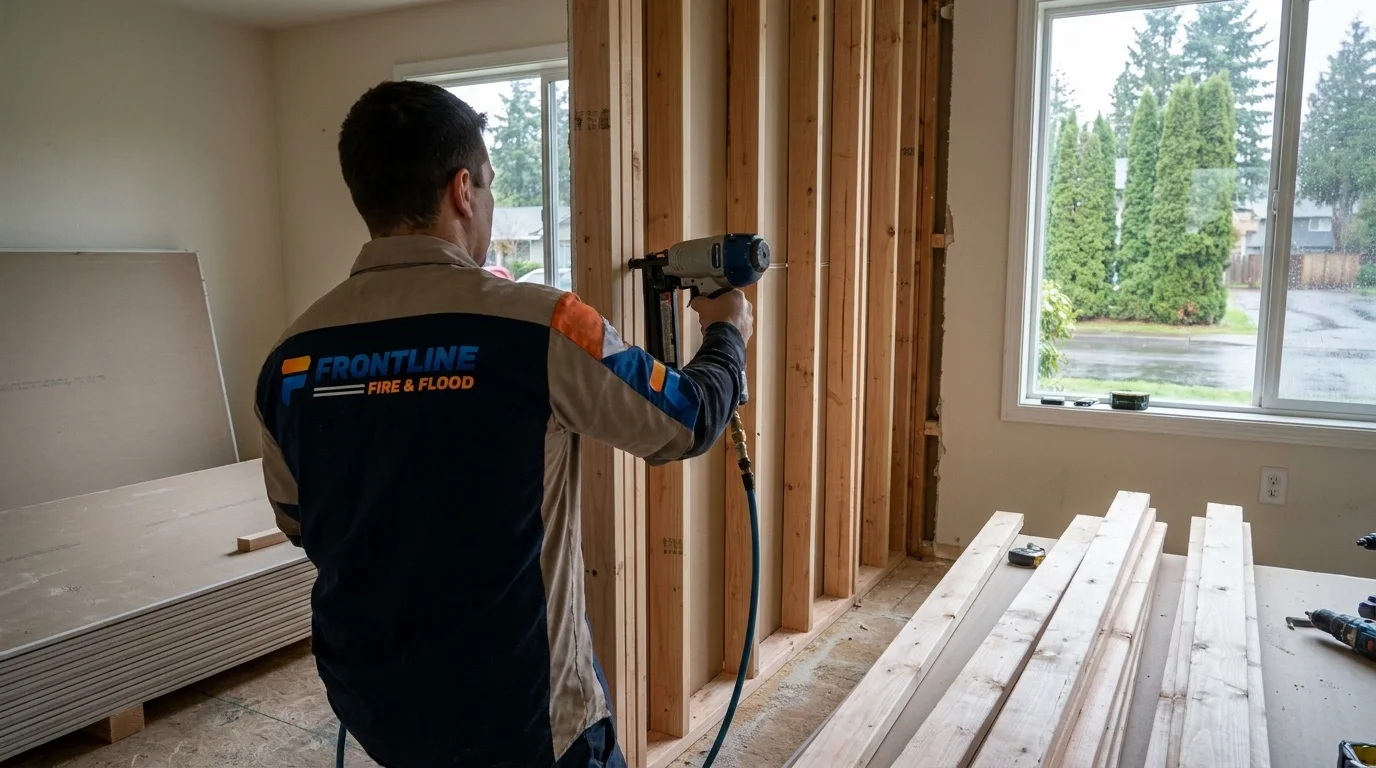
Reconstruction Services in Lakewood
24/7 reconstruction services in Lakewood and surrounding areas. IICRC-certified, insurance billing accepted. Call (253) 200-0503.
A burst pipe or kitchen fire doesn’t end when the water is extracted or the soot is wiped down. What’s left behind is often a house with open wall cavities, missing subfloor, exposed framing, and a punch list that the mitigation crew was never scoped to touch. That gap between “the damage is stopped” and “the house is whole again” is where reconstruction services come in, and it’s where a lot of homeowners get stuck waiting on contractors who don’t talk to their insurance adjuster or their original restoration crew.
What reconstruction services actually involve
Post-damage reconstruction covers everything required to rebuild a structure back to pre-loss condition after water, fire, or storm damage has been mitigated. That can mean replacing drywall and insulation after a Category 2 water loss, reframing a section of wall after fire damage took out studs, rebuilding a bathroom subfloor after a slow leak rotted the joists, or a full room rebuild after a roof failure let weather into the structure for days. The scope ranges from cosmetic (paint, trim, flooring) to structural (framing, load-bearing repairs, code-driven upgrades), and the right scope depends on what the demolition phase actually exposed, not what was visible before the work started.
Timelines vary widely. A single-room drywall and flooring rebuild might run one to two weeks. A multi-room reconstruction involving framing, electrical, and permitting can run six to ten weeks depending on inspection scheduling and material lead times. Reconstruction work in Lakewood often follows mitigation work directly, which is why continuity between the two phases matters: the crew doing the rebuild should know exactly what was removed, why, and what moisture or structural testing cleared the space for closing walls back up.
Our process
- Scope of work. We document existing damage, confirm what mitigation already removed, and write a detailed scope covering materials, labor, and code requirements before any rebuild work starts.
- Permits. Structural work, electrical, and plumbing typically require permits through the local building department. We pull what’s required and schedule inspections around the rebuild timeline rather than treating them as an afterthought.
- Framing and rough-in. Studs, subfloor, and any load-bearing repairs go in first, followed by rough electrical, plumbing, or HVAC work that was displaced during demolition.
- Insulation and drywall. Once rough inspections pass, we insulate, hang and finish drywall, and prep surfaces for final finishes.
- Finishing. Flooring, trim, paint, fixtures, and final touch-ups bring the space back to a livable, move-in condition, followed by a final walkthrough against the original scope.
What separates a good reconstruction response from a bad one
The most common failure point is a reconstruction crew that never saw the original mitigation report. If the drying logs, moisture readings, or demolition photos aren’t reviewed before framing goes back in, hidden problems get sealed behind new drywall instead of fixed. Adjusters look for exactly this continuity: documented moisture levels before closing walls, photos of framing before insulation, and a scope that matches what was actually removed, not a generic estimate.
Another common issue is under-scoping to win the job cheap, then submitting change orders mid-project once hidden damage surfaces. A thorough scope of work accounts for the likelihood of additional findings once walls are open, and a licensed contractor should be able to explain code-driven requirements (like GFCI updates or insulation R-values) that weren’t part of the original structure but are now required for permit sign-off.
What does reconstruction cost?
Reconstruction costs depend heavily on scope: whether the work is cosmetic or structural, how many trades are involved, and whether permits and inspections are required. Every loss is different, which is why we provide a written scope of work before any rebuild begins rather than a ballpark number. Homeowners insurance typically covers reconstruction that restores a covered loss back to pre-loss condition, though code-upgrade costs and betterment items are sometimes handled separately depending on the policy.
| Scenario | Typical range |
|---|---|
| Single room, drywall and paint only | $2,500 - $6,000 |
| Bathroom rebuild after water damage (subfloor, drywall, fixtures) | $8,000 - $18,000 |
| Kitchen reconstruction after fire or water loss | $15,000 - $40,000 |
| Structural framing repair (wall or floor section) | $5,000 - $15,000 |
| Multi-room whole-floor reconstruction | $30,000 - $80,000+ |
Seasonal & regional considerations
In the South Puget Sound area, reconstruction schedules often compete with the regional wet season between fall and early spring, when exterior work (roofing, siding, exterior framing) slows due to rain and limited dry windows. Permitting timelines through local building departments can also add weeks to a project, so starting the permit process early in the scope phase helps keep a reconstruction on schedule rather than idling after demolition is already done.
Service area
Frontline Fire & Flood handles reconstruction services for homeowners and property managers in Lakewood and throughout the surrounding South Puget Sound communities, coordinating rebuild work directly with the mitigation teams and adjusters already involved in the claim.
If your property is sitting mid-demolition with exposed framing, missing drywall, or a punch list nobody’s taken ownership of, get a reconstruction scope of work from a crew that documents the handoff from mitigation to rebuild, not one starting from scratch.
Frequently Asked Questions
Does homeowners insurance cover reconstruction after water or fire damage?
Does the same company that handled mitigation need to do the reconstruction?
What permits are typically required for post-damage reconstruction?
How is reconstruction scoped differently for fire damage versus water damage?
Can reconstruction start before the insurance claim is fully approved?
Looking for the best reconstruction company in Lakewood?
Frontline Fire & Flood provides licensed and insured reconstruction in Lakewood, WA and the surrounding area, and has served local property owners since 2014. Customers rate us 4.9 out of 5 stars across 137 Google reviews. We answer calls 24/7 — call (253) 200-0503 for immediate help.
Need Reconstruction now?
We respond 24/7 across Lakewood and surrounding WA cities.
Related Coverage
- Our Restoration Services
- Contact Frontline Fire & Flood
- Restoration Services in Anderson Island
- Restoration Services in Auburn
- Restoration Services in Bonney Lake
- Restoration Services in Bremerton
- Restoration Services in Burien
- Restoration Services in Centralia
- Restoration Services in DuPont
- Restoration Services in Federal Way
- Restoration Services in Fife
- Restoration Services in Fircrest