
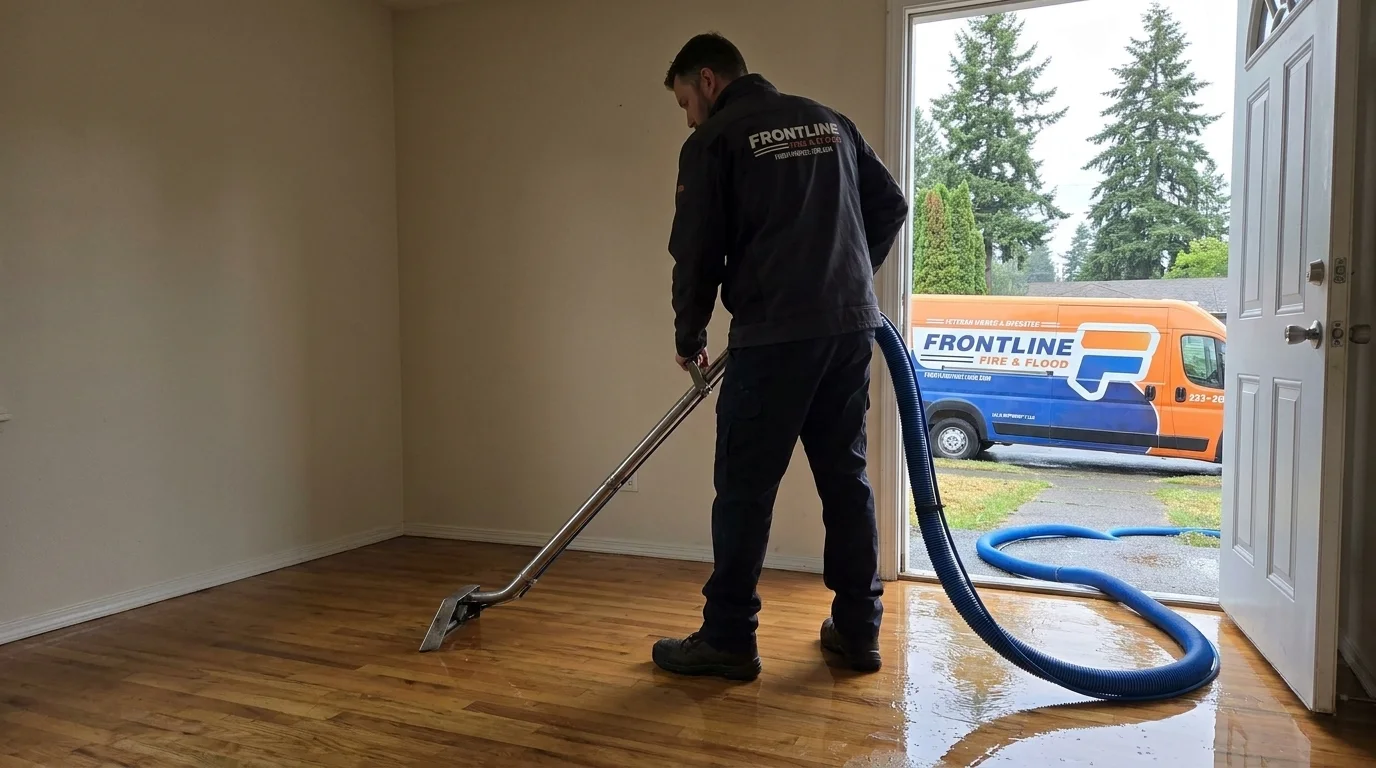
24/7 Emergency Flood Damage Restoration in Lakewood
24/7 emergency flood damage restoration in Lakewood and surrounding areas. IICRC-certified, insurance billing accepted. Call (253) 200-0503.
Flood damage in Lakewood? Standing water that’s crept past the baseboards, a crawlspace that won’t drain, or a sump pump that failed during a storm all call for the same thing: fast extraction before contaminated water sits long enough to reach subfloor, insulation, and framing. We answer 24/7 and document everything your adjuster will ask for.
What flood damage restoration actually involves
Flood damage is different from a clean supply-line leak. Water that enters from outside, whether it’s surface runoff, a backed-up storm drain, or groundwater pushing through a foundation wall, is almost always Category 2 or Category 3 water under IICRC S500 guidelines, meaning it carries silt, bacteria, or worse. That changes the whole job. Extraction has to happen with truck-mounted pumps and submersible units rather than shop vacs, affected porous materials like carpet pad, baseboard, and drywall below the flood line often can’t be dried in place and have to come out, and drying equipment stays on site longer because you’re not just pulling moisture out of a room, you’re pulling it out of wall cavities, subfloor, and sometimes slab. A typical residential flood response runs anywhere from three to seven days of active drying, longer if the water sat for more than 24 to 48 hours before it was caught.
Our process
- Water categorization and safety check. We test the water source and check for electrical hazards, structural movement, and contamination level before anyone steps further into the space.
- Extraction. Standing water comes out first with pumps and extractors sized to the volume, not sponges and shop vacs.
- Removal of non-salvageable materials. Saturated carpet pad, swollen baseboard, and drywall that wicked water above the flood line are removed to stop ongoing wicking and microbial growth.
- Structural drying with monitoring. Air movers, dehumidifiers, and sometimes injection drying for wall cavities run on a schedule, with daily moisture readings logged against drying goals, not just a fixed number of days.
- Antimicrobial treatment and reconstruction scope. Because flood water frequently carries contaminants, affected surfaces get treated before rebuild begins, and we hand over a written scope for repairs.
What separates a good flood response from a bad one
The most common mistake is treating a flood like a clean-water leak: running fans over wet carpet and calling it done. That skips the contamination step entirely and leaves bacteria and organic material trapped under pad or inside wall cavities, which is exactly what grows mold three to five days later. A second mistake is drying the visible surface while ignoring what’s behind it: drywall can read dry with a surface moisture meter while the stud cavity or subfloor underneath stays saturated for days. Adjusters know what to look for here. They want psychrometric readings (temperature, humidity, grains per pound) at the start and throughout drying, photos of the water line and affected materials before demo, and a moisture log showing the space actually hit dry standard before equipment came out, not just that it looked dry.
What does flood damage restoration cost?
Costs depend heavily on how much water intruded, how long it sat, and whether the source was clean groundwater or contaminated floodwater requiring material removal. Every loss gets a written scope before work begins because two floods that look similar on the surface can require very different drying and reconstruction plans. Homeowners insurance typically covers sudden flooding from a failed sump pump or storm-driven water intrusion under the dwelling policy, though water that rises from outside (a true flood event) often falls under a separate flood policy, which is worth confirming with your agent before the claim is filed.
| Scenario | Typical range |
|---|---|
| Single room, clean groundwater seepage | $1,200 - $3,500 |
| Basement flooding, Category 2 water | $3,000 - $7,500 |
| Crawlspace intrusion with insulation removal | $2,500 - $6,000 |
| Whole-floor flood, Category 3 with material removal | $8,000 - $18,000 |
| Flood with contents pack-out and storage | $10,000 - $25,000+ |
Seasonal & regional considerations
Lakewood sits on heavy clay soil with a high water table near American Lake and Steilacoom Lake, which means drainage is slow even in a normal rain event. During the Pacific Northwest’s wet season, roughly October through March, atmospheric river storms can drop sustained rainfall faster than clay soil absorbs it, pushing water toward crawlspaces and basements in older homes that weren’t built with modern perimeter drainage. Homes built before the 1980s in this area are especially prone to foundation seepage during these storm cycles, which is worth knowing if you’re seeing recurring moisture in the same spot every winter.
Service area
We respond to flood damage throughout Lakewood and surrounding communities including Tacoma, University Place, DuPont, Spanaway, and the JBLM area.
If water is actively entering your home or has already soaked flooring and walls, schedule your flood damage assessment now. We’ll document the source and category, extract standing water, and give you a written drying and repair plan before anything else happens.
Frequently Asked Questions
Does homeowners insurance cover flood damage restoration?
What's the difference between Category 2 and Category 3 flood water?
How long does flood drying usually take?
My crawlspace keeps flooding every winter. Is that the same service?
What should I do with furniture and belongings while I wait for help?
Looking for the best flood damage restoration company in Lakewood?
Frontline Fire & Flood provides licensed and insured flood damage restoration in Lakewood, WA and the surrounding area, and has served local property owners since 2014. Customers rate us 4.9 out of 5 stars across 137 Google reviews. We answer calls 24/7 — call (253) 200-0503 for immediate help.
Need Flood Damage Restoration now?
We respond 24/7 across Lakewood and surrounding WA cities.
Related Coverage
- Our Restoration Services
- Contact Frontline Fire & Flood
- Restoration Services in Anderson Island
- Restoration Services in Auburn
- Restoration Services in Bonney Lake
- Restoration Services in Bremerton
- Restoration Services in Burien
- Restoration Services in Centralia
- Restoration Services in DuPont
- Restoration Services in Federal Way
- Restoration Services in Fife
- Restoration Services in Fircrest