
TL;DR: If water is actively spreading in a Tacoma home, shut off the source if you can reach it safely, then call a 24/7 IICRC-certified water damage restoration company, not a general contractor or the insurance company first. A licensed local crew can extract standing water, start structural drying, and document the loss for your claim within hours, which limits secondary damage like mold growth and warped flooring.
If a supply line just let go under a sink in your Stadium District bungalow, or runoff is backing up through a window well near Point Defiance, the first call matters more than people expect. Call Frontline Fire & Flood at (253) 200-0503, a 24/7 IICRC-certified restoration crew rated 4.9 stars across 137 Google reviews, licensed and insured in Washington. Calling a restoration company before you call anyone else gets extraction equipment moving while the water is still fresh, which is the single biggest factor in whether your floors and drywall can be saved.
Who do you call first when water won’t stop running?
Call the restoration crew first if the water source is already stopped or you can’t reach a shutoff, and call a plumber first only if water is still actively flowing from a pipe, fixture, or water heater that needs a wrench on it. Most Tacoma calls are a mix of both: a plumber or the main shutoff handles the source, and the restoration crew handles everything the water touched.
If you can turn the main water shutoff valve yourself (usually near the water meter or where the line enters the house), do that immediately. It buys time and often means the restoration crew can start extraction before a plumber even arrives. If you can’t locate it or the leak is from a fixture you don’t recognize, that’s a plumber’s job first.
When is it a plumber, 911, or the insurance company instead?
Call 911 or the utility company first if there’s any electrical hazard, standing water near an active outlet or panel, or a gas smell, before worrying about the water itself. Those are life-safety calls, not restoration calls.
Here’s the quick breakdown Tacoma homeowners actually need:
- Water still actively flowing from a pipe or appliance → plumber first, restoration crew right behind them
- Electrical hazard, exposed wiring, or gas smell → 911 or your utility, then everyone else
- Water has stopped but is sitting on floors, soaking drywall, or seeping into a crawlspace → restoration crew first
- Sewage backup from a main line or toilet → restoration crew with sewage cleanup experience, not a standard plumber
- Insurance company → after mitigation has started, not before. Most policies require you to limit further damage immediately, and a restoration company’s documentation (moisture readings, photos, drying logs) is what actually supports the claim. Our guide on what to do in the first 24 hours after water damage covers that sequence in more detail, and whether your policy covers the loss at all is worth reading before you file.
What happens on the first call for water damage in Tacoma?
On the first call, a restoration crew asks what’s actively happening (source stopped or not, how long the water has been sitting, what rooms are affected) and dispatches a technician to assess and begin extraction. Because this service operates 24/7, that call can happen any hour, including the 2 a.m. burst pipe during a hard freeze or the storm surge backing up a Puyallup River tributary near South Tacoma.
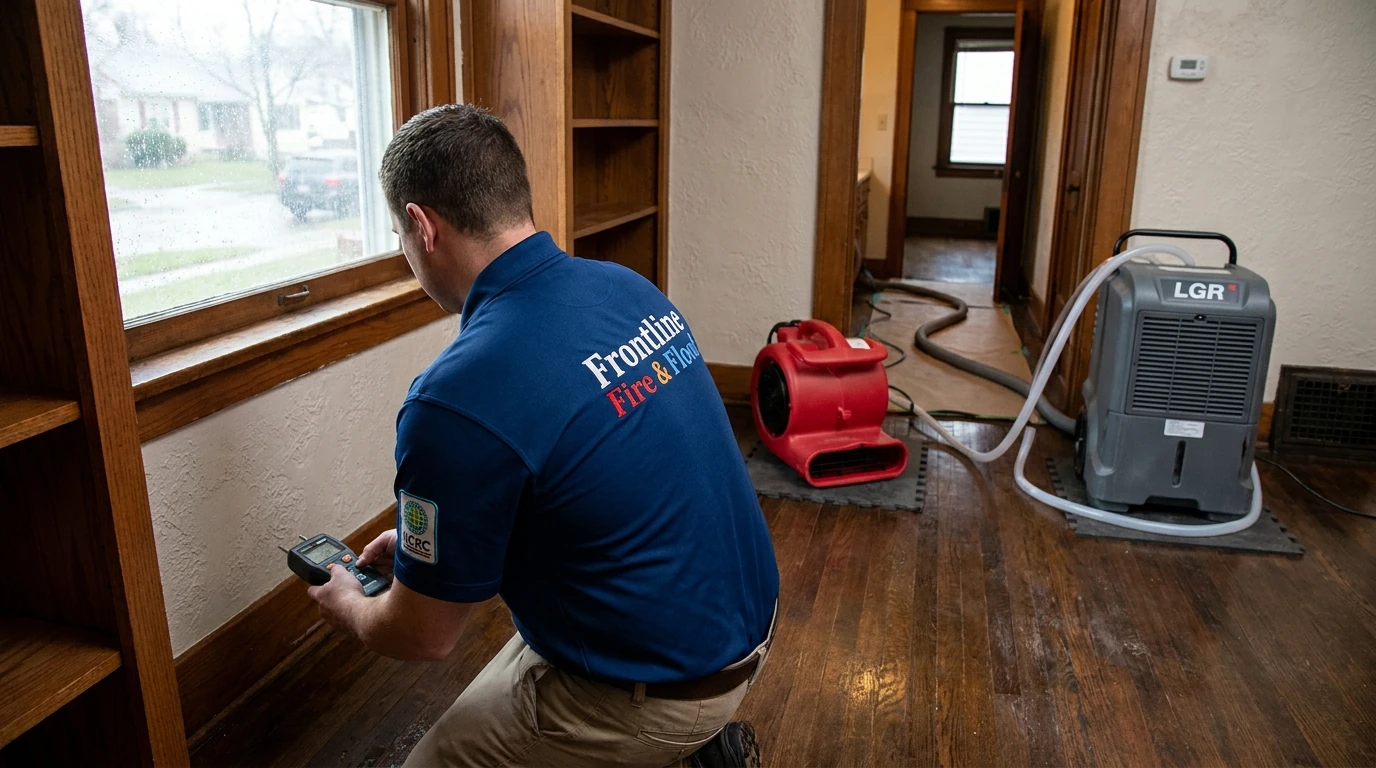
On arrival, the technician identifies the water category (clean, gray, or Category 3 black water, following the IICRC S500 standard), takes moisture readings on affected materials, and sets up extraction and drying equipment: truck-mounted extractors for standing water, air movers and LGR dehumidifiers for the structure itself. They also photograph and log everything, which becomes the documentation your adjuster needs. If the home needs board-up or tarping because of a related storm event, that gets scoped at the same visit.
Drying typically runs three to five days depending on how much material absorbed water and how long it sat before the crew arrived, which is part of why the first call matters so much. A home with water sitting for 36 hours before anyone calls almost always costs more to dry out and repair than one where extraction started the same day.
What should I have ready before the crew arrives?
Have your homeowners insurance policy number, photos of the damage as you found it, and the shutoff status (on or off) ready before the technician gets there. That alone speeds up both the assessment and the eventual claim.
If you can safely move furniture, rugs, or electronics out of standing water before anyone arrives, do it, but don’t put yourself at risk doing it. Note the approximate time the damage was discovered. That single detail often matters more to an adjuster than anything else in the file.
A burst pipe or sewage backup doesn’t wait for business hours, and in Pierce County’s wet winters it rarely picks a convenient moment either. Getting the right call made first, plumber or restoration crew, limits what starts as a wet spot from becoming a mold problem three weeks later. The water damage restoration service page covers what a full scope of work typically includes once a crew is on-site.
About Frontline Fire & Flood
Frontline Fire & Flood is an IICRC-certified restoration company (license CCFRONTFF761CB) based in Lakewood, WA, serving Tacoma and the greater Pierce County area since 2014. Their crews handle water damage restoration, sewage cleanup, fire and smoke restoration, mold remediation, storm damage, and emergency board-up and tarping, with 24/7 dispatch and a 4.9-star rating across 137 Google reviews.