
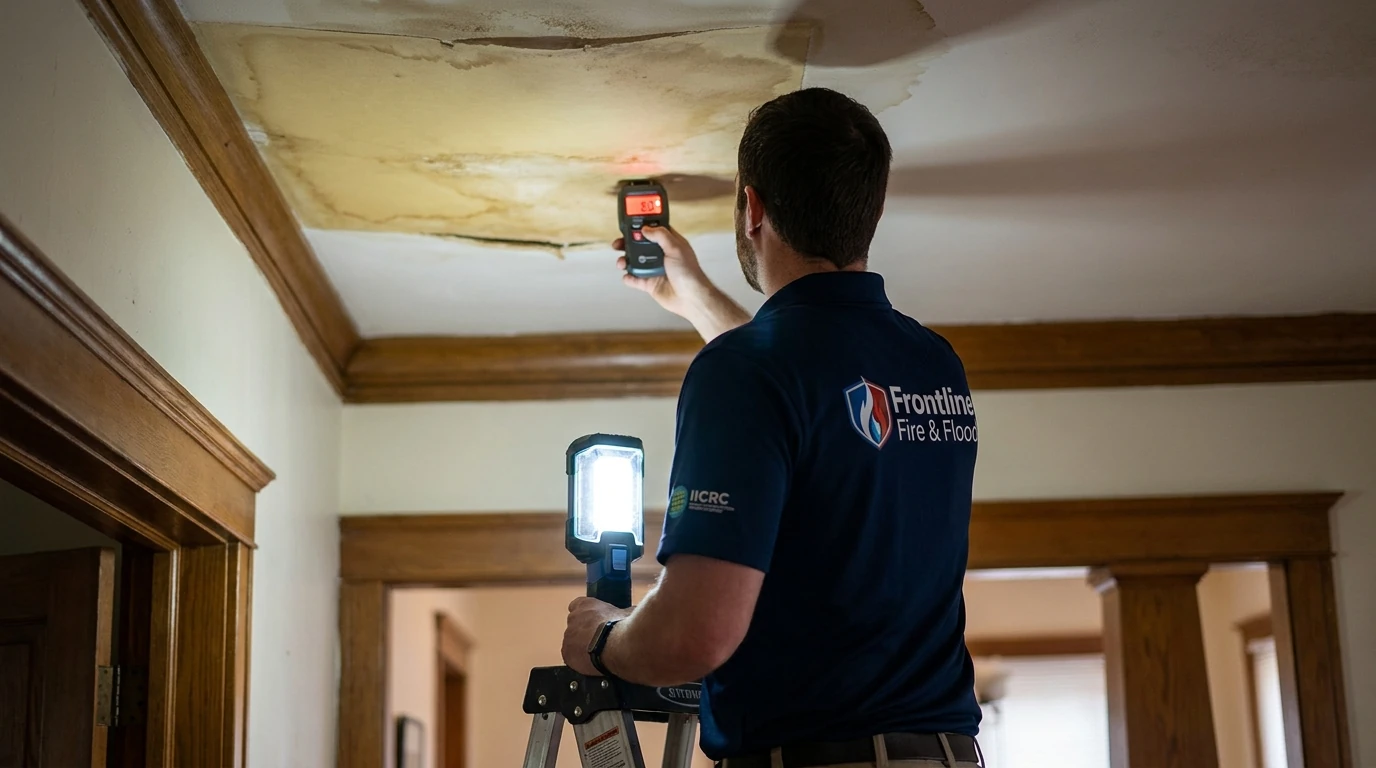
TL;DR: A spreading water stain on your ceiling almost always means water is actively getting into the structure above it, most often from a roof leak, a clogged gutter backing up under the shingles, or a supply line or tub overflow from the floor above. A small, dry, stable stain can usually wait for a scheduled repair. A stain that’s growing, soft to the touch, or sagging is an emergency that can lead to ceiling collapse and needs water extraction and drying within hours, not days.
If you live in one of Tacoma’s older craftsman homes near the North Slope Historic District, or a split-level out toward South Tacoma, a ceiling stain usually shows up the same way: a yellow-brown ring that appears a day or two after a hard rain, or right under an upstairs bathroom. By the time you can see it from below, water has typically been sitting in the insulation and drywall above it for hours already. What you do in the next 24 hours is often the difference between a $300 drywall patch and a full water damage restoration job with a mold problem attached.
Why Is My Ceiling Leaking After Heavy Rain?
In most Pierce County homes, a ceiling leak after heavy rain comes from one of three places: a roof that’s lost its seal at a flashing point, a gutter or downspout that’s overflowed and pushed water back under the shingles, or an attic ventilation problem that’s let condensation build up and drip. Western Washington’s long, steady rain events are harder on roofs than a single big storm, because water has more time to find every gap.
Flat and low-slope roof sections, common on additions and older Tacoma bungalows, are especially prone to ponding after a multi-day rain, which forces water through seams that would shed a quick downpour fine. If the leak shows up anywhere near an upstairs bathroom, laundry room, or kitchen instead of an exterior wall, the cause is more likely a supply line, a wax ring under a toilet, or a dishwasher or washing machine connection than the roof at all. Either way, the fix starts with finding the actual source, not just patching the ceiling and hoping.
Is a Water-Stained Ceiling an Emergency, and Can It Collapse?
A ceiling can collapse under water weight, and it happens more often than most homeowners expect. Drywall and plaster lose structural integrity fast once they’re saturated, and a ceiling holding several gallons of trapped water can fail with no warning.
Use this quick gut-check: if the stain is small, dry to the touch, and hasn’t changed size in a week, it’s likely a slow or resolved leak that can wait for a scheduled repair. If it’s growing, feels soft or spongy when you press it gently with a gloved hand, is actively dripping, or has started to sag or bubble, treat it as an emergency. Shut off water to that area if you can identify the source, move furniture and valuables out from underneath, and if the ceiling is visibly bowing, stay out of the room entirely until it’s been relieved or supported. A sagging ceiling is carrying weight it was never built for.
How Do You Repair a Water-Damaged Ceiling?
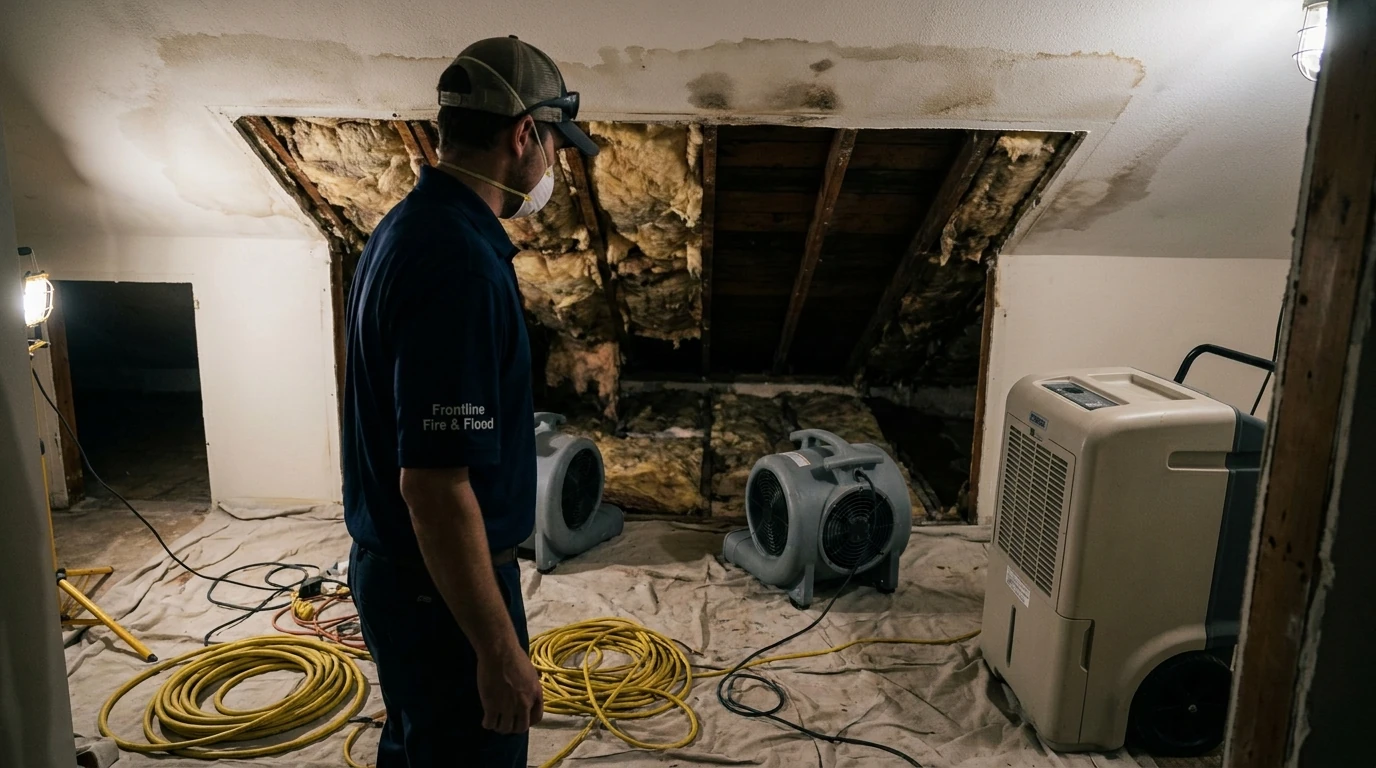
Ceiling water damage repair is a sequence, not a single step: stop the water source, remove the saturated material, dry the structure, then rebuild the surface. Skipping the drying step and jumping straight to a cosmetic patch is the single most common mistake homeowners make.
- Stop the source. Shut off the supply line, tarp the roof, or clear the gutter, whatever caused it.
- Contain and dry. Trapped insulation and wet framing need to reach a dry standard before anything gets covered up again. Restoration crews follow the IICRC S500 standard for water damage, which sets the benchmark for how dry is actually dry, using air movers and dehumidifiers over several days, not a box fan overnight.
- Remove damaged material. Saturated drywall, blown insulation, and any wet plaster that won’t bond again come out. Insulation in particular rarely dries fast enough to save once it’s wet.
- Rebuild. New drywall or plaster, taped, mudded, primed, and painted to match.
A small, isolated stain from a one-time event, like a single overflowed tub, that you caught and dried within a day or two, is often fine as a DIY paint-and-patch job. If the leak went on for more than 24-48 hours, if insulation got wet, or if you can smell a musty odor when you’re under the stain, call a professional. Wet insulation and framing that stay closed up behind new drywall are exactly how mold gets established where nobody can see it, and the EPA’s guidance on mold and moisture is clear that controlling moisture within 24-48 hours is the only reliable way to prevent growth. If you’re not sure how far the water traveled, our water damage restoration page for Tacoma walks through what a moisture assessment covers.
Does Insurance Cover Ceiling Water Damage?
Most homeowners policies cover ceiling water damage when the cause is sudden and accidental, like a burst supply line or a storm-driven roof failure, but typically exclude damage from a leak that went unaddressed for weeks or months. The distinction insurers care about is sudden versus gradual, not how bad the ceiling looks.
Roof leaks get extra scrutiny: if the adjuster determines the roof was already worn out or poorly maintained, the water damage portion may be covered while the roof repair itself is denied as a maintenance issue. Photograph the stain, the source if you can see it, and any standing water before cleanup starts, and get a written moisture reading on file. That documentation is what separates a smooth claim from a denied one. We cover the claim process in more detail in our plain-English guide to homeowners insurance and water damage.
A water-stained ceiling is rarely just a cosmetic problem. It’s a signal that something above it failed, and the longer that moisture sits, the more it costs to fix. If you’re in Tacoma, Lakewood, or anywhere around South Sound and you’re staring at a stain that’s changed shape since yesterday, get a moisture reading before you reach for the paint roller. Our full breakdown of what to do in the first 24 hours after water damage covers the steps that matter most before a technician even arrives.
About Frontline Fire & Flood
Frontline Fire & Flood is an IICRC Certified Firm serving Lakewood, Tacoma, and the South Sound since 2014, holding WA contractor license CCFRONTFF761CB. Their technicians carry IICRC credentials in water restoration (WRT), structural drying (ASD), and mold remediation (AMRT), and the company runs 24/7 to respond to active leaks before a ceiling stain becomes a ceiling collapse. Jared Toppenberg and the Frontline team handle water damage restoration, mold remediation, storm damage restoration, and related emergency services across Pierce and Thurston counties.
Need help now? Call Frontline Fire & Flood at (253) 200-0503.