
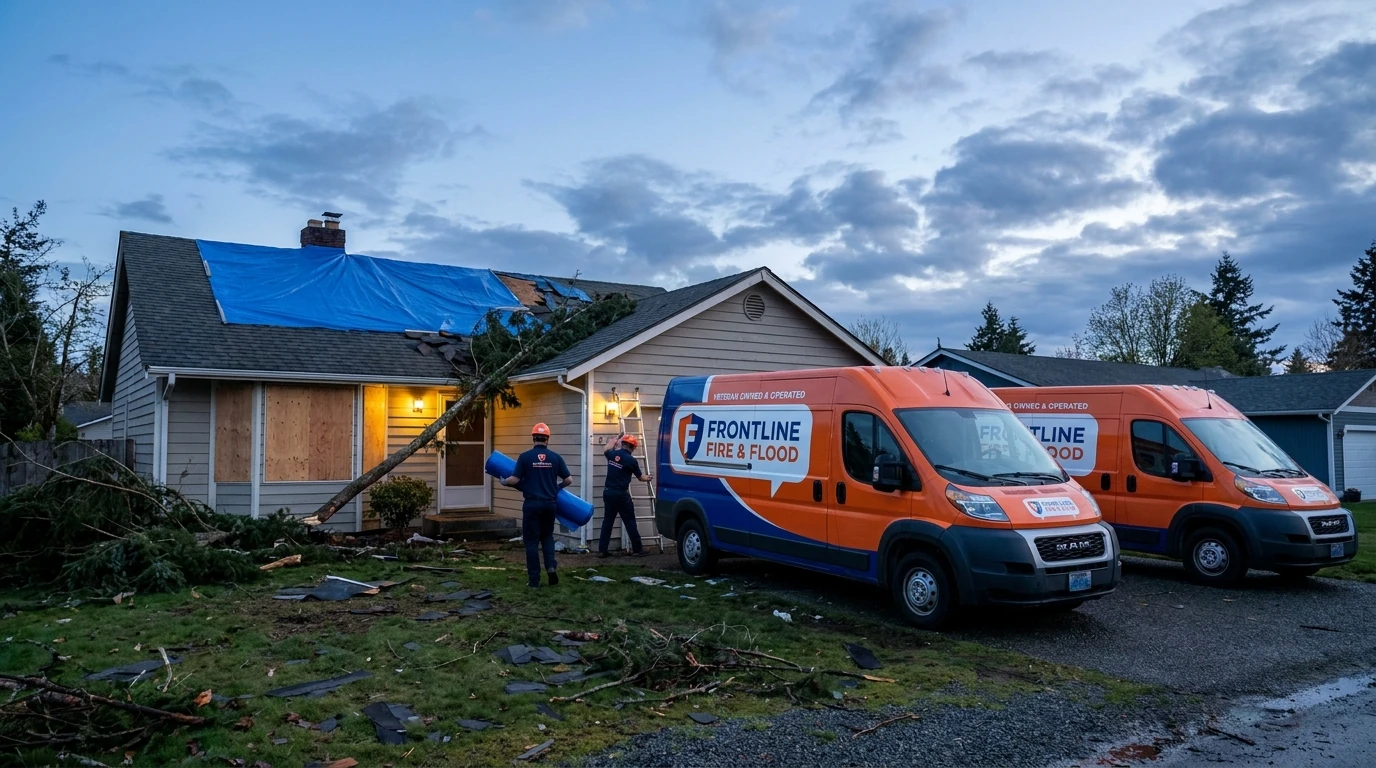
TL;DR: After a windstorm damages your Puyallup home, secure the structure first (board-ups, roof tarps), document everything before touching it, then call a licensed storm damage restoration company. Most homeowners policies cover sudden wind and storm damage, but the clock starts immediately on mold risk and further structural damage. An IICRC-certified crew can assess, tarp, dry, and rebuild in a coordinated process that protects your insurance claim from the start.
If you woke up this morning to a tree through your roof, missing shingles over the South Hill neighborhood, or a fence-turned-projectile that punched through a wall near Pioneer Park, you’re in the right place. Pacific Northwest windstorms move fast and hit hard. The damage they leave behind is a combination of structural breach, water intrusion, and a tight window before secondary problems like mold take hold. Here is what to do, in order.
Is My Home Safe to Stay In After Wind Damage?
After a windstorm, your home may not be safe to occupy until a professional assesses the structural integrity. If you see a roof section that has shifted, a wall that has bowed, or windows that are fully open to the elements, treat those as evacuation signals. Turn off electricity to any area where the roof or exterior wall is breached, because water and live circuits are a serious hazard.
For less severe damage (a few missing shingles, a broken window, damaged siding), the home is often safe to stay in as long as you get temporary protection in place quickly. Every hour a roof breach stays open is another hour of rain getting into your attic, insulation, and ceiling drywall. In Puyallup’s climate, that moisture can begin supporting mold growth within 24 to 48 hours, per EPA guidance on mold and moisture.
Call for emergency board-up and tarping before you call your insurance company. The insurer will want to see that you took reasonable steps to prevent further damage.
What Does Storm and Wind Damage Restoration Actually Involve?
Storm damage restoration is not just patching a roof. It is a coordinated process that addresses the breach, the water that got in, and any structural or contents damage that followed.
Here is how a professional restoration typically unfolds:
-
Emergency stabilization. A crew arrives to install roof tarps, plywood board-ups over broken windows or doors, and temporary weatherproofing. This stops the damage from getting worse while the full scope is assessed. Frontline Fire & Flood provides emergency board-up and tarping around the clock.
-
Damage assessment and documentation. A project manager walks the property and documents every affected area with photos, moisture readings, and written notes. This documentation becomes the backbone of your insurance claim. Do not skip this step or let a contractor start work before it is done.
-
Water extraction and structural drying. If rain entered through the breach, the affected materials need to be dried to IICRC S500 standard before any reconstruction begins. This means deploying LGR dehumidifiers and high-velocity air movers, then monitoring moisture levels daily until readings confirm the structure is dry. Cutting corners here leads to mold inside your walls.
-
Debris removal and contents protection. Fallen tree limbs, broken glass, damaged roofing materials, and compromised contents all need to be handled. Salvageable contents can be moved to contents restoration and storage while the structure is repaired.
-
Reconstruction. Once the structure is dry and stable, repairs begin: roofing, siding, drywall, insulation, windows. A full-service restoration company coordinates this so you are not managing three separate contractors.
If you have water damage from storm intrusion, the post What To Do in the First 24 Hours After Water Damage walks through the immediate steps in detail.
Will Homeowners Insurance Cover Wind and Storm Damage in Washington?
Most standard homeowners policies in Washington cover sudden, accidental wind and storm damage. This includes damage from windstorms, hail, falling trees, and the water intrusion that results directly from a storm breach. What policies typically exclude is flooding from ground-level water (that requires separate flood insurance) and damage that resulted from deferred maintenance (a roof that was already failing before the storm).
The distinction that matters most for your claim is whether the water got in because of the storm (covered) or because of a pre-existing condition the storm exposed (disputed). A well-documented restoration scope, written before work begins, is what keeps that distinction clear.
Key steps to protect your claim:
- Photograph everything before any cleanup. Every broken shingle, every wet ceiling tile, every piece of damaged siding.
- Get a written scope of work from your restoration contractor before signing anything. This scope is what the adjuster reviews.
- Do not accept a verbal estimate or let a contractor start reconstruction without a signed authorization and documented scope.
- File promptly. Washington insurers expect timely notice. Delays can complicate claims.
For a deeper look at how homeowners policies handle water intrusion specifically, see Does Homeowners Insurance Cover Water Damage?
What Are the Biggest Mistakes Puyallup Homeowners Make After a Windstorm?
The most costly mistake is waiting. A roof breach that sits open for two or three days in a Puyallup fall rainstorm can turn a $4,000 repair into a $25,000 mold and structural drying project. The second most common mistake is letting a general roofing contractor handle the full scope when there is interior water damage involved. Roofers fix roofs. They are not equipped to dry structural assemblies or document moisture readings for an insurance claim.
Other mistakes that complicate claims:
- Throwing away damaged materials before the adjuster or restoration company documents them. Keep debris on-site or photograph it thoroughly before disposal.
- Signing a contractor’s assignment of benefits without understanding what you are giving up. In Washington, you have the right to manage your own claim.
- Starting reconstruction before drying is confirmed. Sealing wet materials inside new drywall is how mold gets trapped inside walls where you cannot see it.
- Accepting a low initial estimate without a full scope. Adjusters sometimes issue an initial payment based on visible damage only. A thorough written scope from your restoration contractor is how you document the full loss.
What Should I Do Right Now?
If you are dealing with storm or wind damage in Puyallup today, here is the short list:
- Make sure the structure is safe to enter. If there is any doubt, stay out.
- Call for emergency board-up and tarping to stop further damage.
- Photograph everything before anyone touches it.
- Call your insurance company to open a claim.
- Get a written scope from a licensed, IICRC-certified restoration company before reconstruction begins.
Frontline Fire & Flood is available 24/7 at (253) 200-0503. Their crews serve Puyallup and the surrounding Pierce County area, including South Hill, Spanaway, and Bonney Lake, and are IICRC-certified for storm damage restoration. They handle emergency stabilization, water extraction, structural drying, and coordinate directly with your insurance adjuster so the documentation is right from the start.
Do not wait on a tarp. The next rain event does not care that you are still figuring out your claim.
About Frontline Fire & Flood
Frontline Fire & Flood is an IICRC-certified firm serving Puyallup, Lakewood, Tacoma, and the greater Pierce County area since 2014 (license CCFRONTFF761CB). Their certified team holds IICRC credentials in water damage restoration, structural drying, fire and smoke restoration, and mold remediation. They are EPA Lead-Safe certified, OSHA trained, licensed and insured in Washington, and available 24/7 for emergency response. Services include storm damage restoration, water damage restoration, mold remediation, fire damage restoration, sewage cleanup, asbestos abatement, emergency board-up and tarping, and contents restoration and storage.