
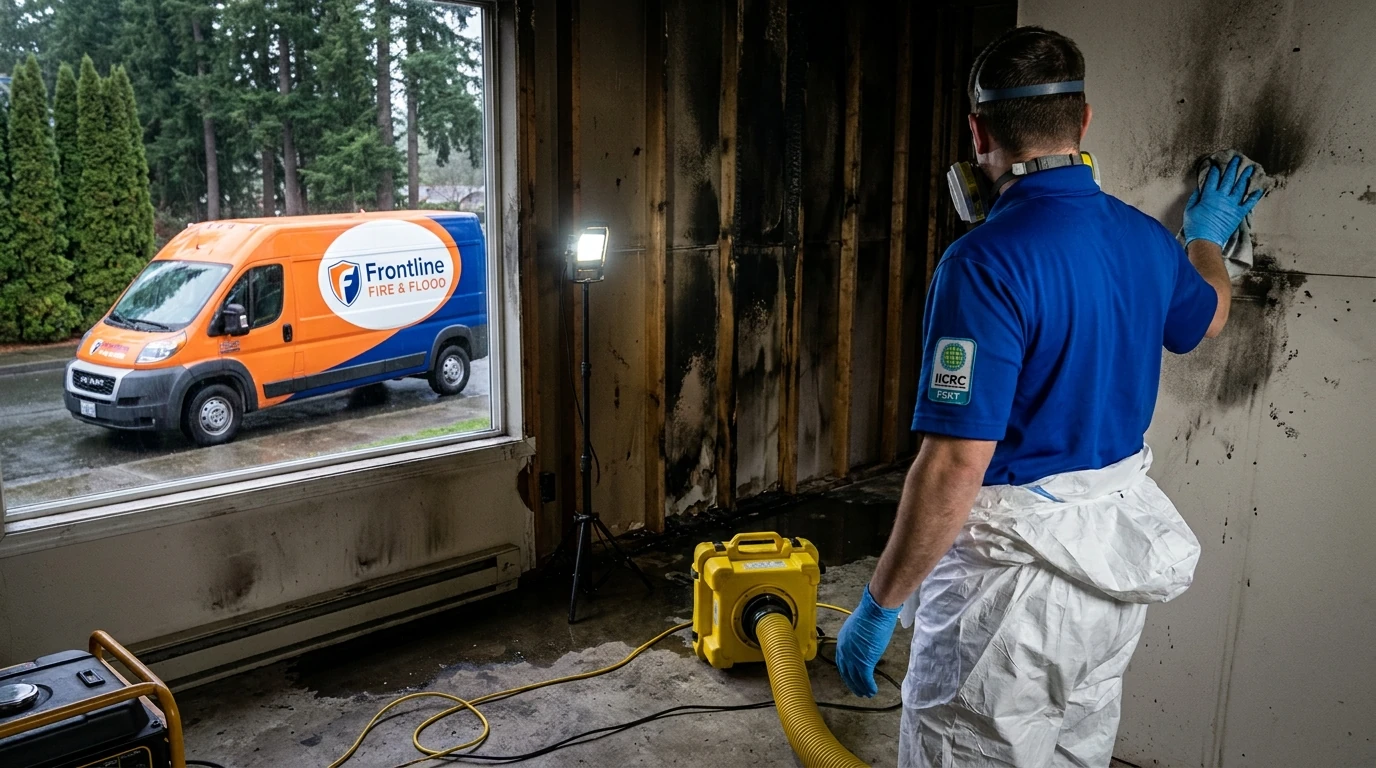
TL;DR: Fire and smoke restoration is the process of drying out firefighting water, removing acidic soot residue, cleaning or replacing damaged contents, and eliminating smoke odor from a structure after a fire. It should start within 24 to 48 hours because soot keeps etching metal, yellowing plastic, and staining grout the longer it sits. Most homeowners policies cover it under the dwelling and personal property sections when the fire was accidental, and a written scope of work protects the claim from the start.
If an electrical short or a kitchen fire just tore through part of your DuPont home, the fire department’s hoses probably did almost as much damage as the flames did. You’re looking at soot-blackened walls, soaked carpet, and a burnt-plastic smell that won’t quit, and you don’t know whether to call a contractor, your insurance agent, or a cleaning crew first. Whether your house sits in the newer Northwest Landing section of town or one of the older homes closer to downtown DuPont, the restoration process runs the same: stabilize the structure, stop the soot from spreading, dry out the water, and clear the odor before anyone moves back in.
What Does Fire and Smoke Restoration Actually Include?
Fire and smoke restoration is the coordinated process of removing soot, drying firefighting water, cleaning or storing damaged belongings, and deodorizing a structure so it’s safe and livable again. It’s not one task. It’s usually five or six running in parallel: board-up, water extraction, soot and residue cleaning, contents pack-out, odor treatment, and finally reconstruction of whatever was removed down to the studs.
A fire restoration crew typically works the job in this order:
- Board-up and tarping over broken windows, burned-through roofing, or a breached wall so the structure is secure and weatherproof.
- Water extraction from the firefighting effort, since most structure fires leave more standing water than visible fire damage.
- Soot and residue removal from walls, ceilings, and surviving contents using dry sponges, HEPA vacuums, and chemical sponges matched to the soot type.
- Contents restoration moving salvageable belongings offsite for ultrasonic cleaning, ozone treatment, or storage while the structure dries and rebuilds.
- Deodorization using hydroxyl generators or thermal fogging to neutralize smoke odor trapped in porous materials, not just mask it.
- Reconstruction, rebuilding drywall, flooring, and cabinetry that had to be removed.
That’s the full arc most insurance adjusters expect to see documented, and it’s why it helps to have one crew managing all of it instead of three separate contractors handing off paperwork.
How Soon Should Restoration Start After a Fire?
Restoration should begin within 24 to 48 hours of the fire department clearing the scene, because soot is acidic and keeps damaging surfaces the longer it’s left untouched. Within days, untreated soot can permanently etch chrome and glass, yellow painted trim, and corrode appliance housings that would otherwise have been salvageable.
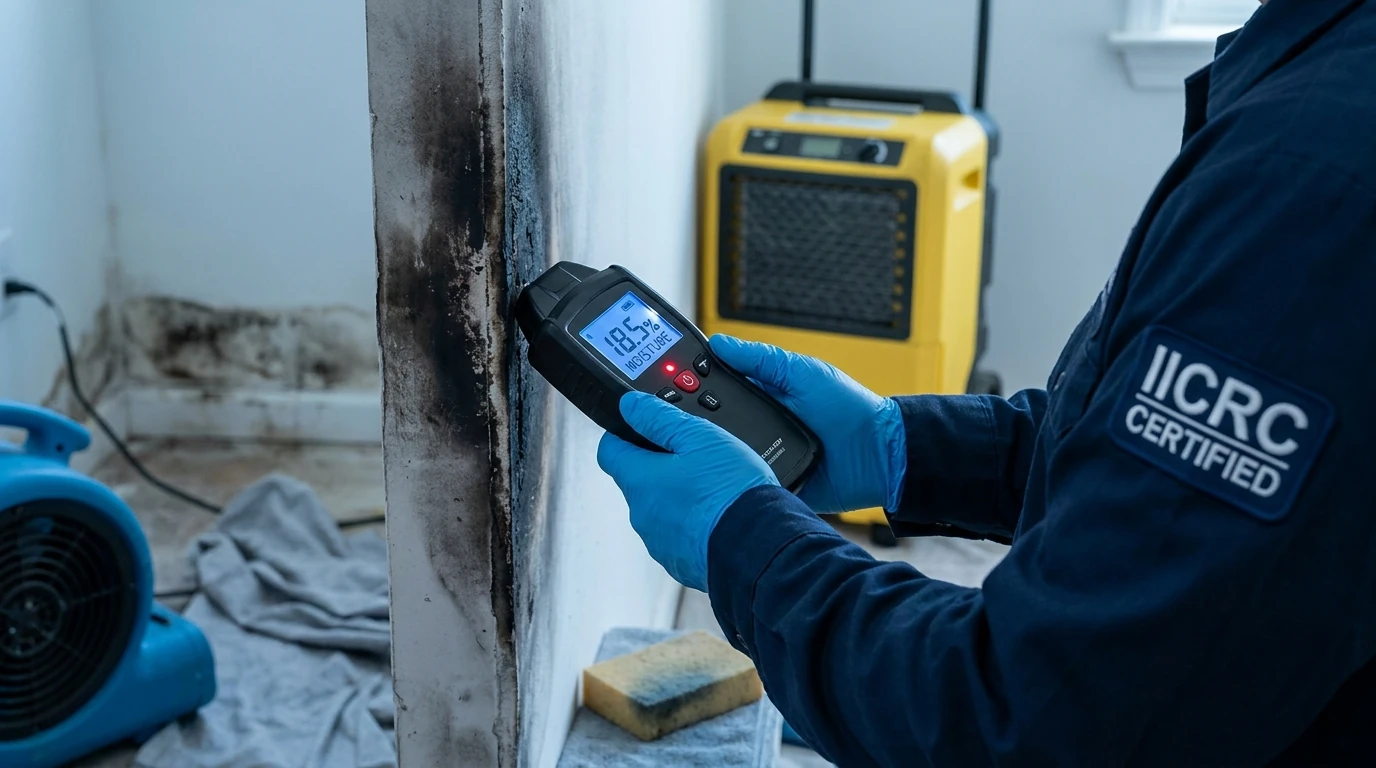
The firefighting water adds a second clock. Drywall and subfloor that stayed wet for more than 48 hours start to grow mold, which turns a fire claim into a combined fire-and-mold claim and adds cost and time to the repair. A moisture assessment on day one, with air movers and dehumidifiers placed that same day, is what keeps the water portion of the loss from compounding the fire portion.
What’s the Difference Between Fire Damage and Smoke or Soot Damage?
Fire damage refers to the direct burn, which is confined to the room or rooms where the flames actually reached. Smoke and soot damage spreads through the whole structure, carried by the HVAC system and open doorways, and it’s usually the larger repair cost even in a small, contained fire.
Soot itself comes in different forms that change the cleaning approach. Dry soot from a fast, hot fire (wood, paper) wipes off relatively easily with a dry chemical sponge. Wet, greasy soot from a smoldering fire (plastics, synthetics, cooking oil) smears if you try to wipe it and needs a solvent-based cleaner instead. A restoration tech identifies which type they’re dealing with before touching a wall, because the wrong cleaning method can grind soot deeper into drywall and paint. For more on how this plays out room by room, our fire damage restoration process guide walks through what a typical job timeline looks like.
Will Homeowners Insurance Cover Fire and Smoke Restoration?
Most homeowners and commercial property policies cover fire and smoke restoration under the dwelling coverage (structure) and personal property coverage (contents), as long as the fire was accidental rather than intentional. That typically includes the board-up, water extraction, soot cleaning, deodorization, and reconstruction all in one claim.
What gets disputed is usually scope, not coverage itself: whether smoke-damaged drywall needs full replacement or can be cleaned and repainted, or whether an HVAC system needs duct cleaning because soot traveled through it. A detailed written scope with photos, moisture readings, and an itemized contents inventory, submitted early, is what keeps those line items from getting cut during adjuster review. If a unit next door caught fire and smoke traveled into yours through shared ductwork or attic space, that’s also typically a covered loss under your own policy’s smoke damage provision, even though the fire never touched your unit directly.
If your property also took on firefighting water that soaked carpet, subfloor, or drywall, that portion of the claim runs alongside the fire claim rather than as a separate one. Our guide on what homeowners insurance covers for water damage explains how insurers typically treat sudden water loss, which applies to the water side of a fire claim as well.
What Should You Do in the First Few Hours After the Fire Department Leaves?
The first few hours matter most for safety and documentation, not for cleaning. Don’t attempt to clean soot yourself. It smears into porous surfaces and makes professional cleaning harder, and soot residue can carry carcinogenic byproducts you don’t want on bare skin.
Before anyone re-enters:
-
Confirm the fire department or a structural engineer has cleared the building as safe to enter.
-
Photograph every room, including ceilings, before anything is moved or touched.
-
Shut off HVAC systems so soot and odor don’t recirculate through the ducts.
-
Call your insurance carrier to open the claim, then schedule a restoration assessment the same day if possible.
-
If windows, doors, or the roof were breached, get a board-up and tarp placed immediately, both for security and to keep weather out.
According to NFPA, structure fires that go unmitigated for even a day or two see significantly more secondary damage from soot migration and moisture than fires that get professional intervention immediately. The faster a qualified crew gets equipment in, the smaller the eventual repair scope.
Frontline Fire & Flood handles the full arc of a fire loss, from the initial board-up through contents restoration, odor removal, and the structural drying that keeps a fire claim from becoming a mold claim too. If your DuPont home or business just went through a fire, a same-day assessment and a written scope are the two things that protect both your family and your claim.
About Frontline Fire & Flood
Frontline Fire & Flood is an IICRC Certified Firm serving Lakewood, WA and the surrounding South Sound, including DuPont, Tacoma, and Puyallup, since 2014. Their technicians hold IICRC FSRT (Fire & Smoke Restoration) and ASD (Applied Structural Drying) certifications, and the company operates 24/7 with licensed and insured crews (WA license CCFRONTFF761CB). Their fire and smoke restoration work is paired with water removal, odor removal, and contents restoration services under one scope.